
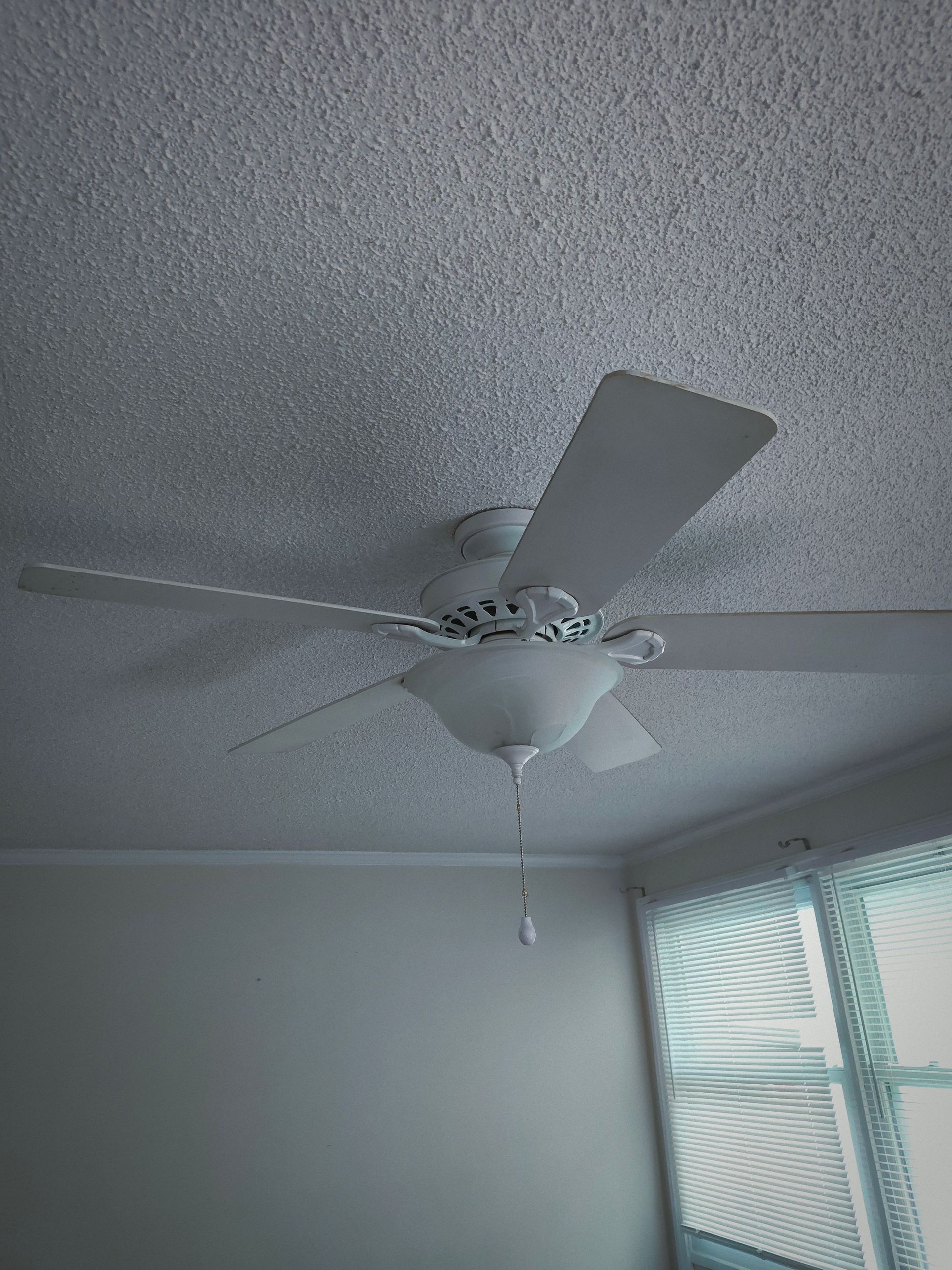
Ceiling Fans Balanced and Wired to Last
Ceiling Fan Installation in Rock Hill for homes where light-rated ceiling boxes cannot support a fan's weight and movement
Many older Rock Hill homes were fitted with a light fixture and a standard ceiling box—adequate for a globe or flush mount, not for a fan that oscillates under load for years. Rock Hill Electrician installs ceiling fans in homes and businesses across Rock Hill, handling new installs, fixture replacements, and locations where wiring needs to be added from scratch. The owner operates the business directly and prices each job before the work begins, so there are no surprises on the final invoice.
Before a fan is mounted, the electrician confirms the ceiling box rating. A standard outlet box fastened to one side of a joist is not rated for a fan's dynamic load, and installing a fan on one is both a code violation and a failure waiting to happen. Where the box is not fan-rated, a fan-rated brace bar is installed between joists and supports the fan independent of any single framing member. The wiring is then checked at the switch and the power feed, the fan is hung, and it is tested on every speed and the light kit before the job is finished. If the location has no existing wiring at all, a new circuit is included in the quote at the outset.
Schedule an on-site visit to confirm whether your ceiling location needs a box upgrade before your fan is ordered or delivered.
The Difference Between a Fan Install and a Fixture Swap
Swapping a light fixture for a ceiling fan is a different job than most homeowners expect. A light fixture is a static load: it hangs, it does not move, and a box rated for fifty pounds of static weight will hold it. A ceiling fan is a dynamic load: the motor and blade assembly spin continuously, creating rotational force that transfers directly to the mounting point. That difference is why electrical code requires a fan-rated box rather than a standard fixture box, and why the box check happens before anything else on a ceiling fan installation.
Once the fan is mounted on a confirmed fan-rated box and wired correctly, the blades are balanced using the weight tab method if any wobble is present after initial spin-up. A properly balanced fan runs without vibration or blade wobble on all speeds, and the motor should be quiet enough that you cannot hear it over normal conversation. In homes in Fort Mill and Clover where vaulted ceilings are common in newer builds, a downrod of the correct length is part of the install plan so the fan sits at the right height for both airflow and clearance.
The switch wiring also matters. A fan with a light kit requires either a two-circuit switch leg to control the fan and light independently, or a remote or smart receiver if only a single wire runs to the switch. The electrician confirms what is present in the wall before the fan is mounted so the control solution matches what is physically available without cutting into finished drywall unnecessarily.
Questions Before Starting Your Ceiling Fan Project
Ceiling fan installations in Rock Hill homes often involve decisions about box ratings, wiring configurations, and switch options that are not obvious when purchasing a fan. The questions below address the most common points that come up during the work.
How does the electrician determine whether the existing ceiling box can hold a fan?
The box is visually inspected for its UL listing label and mounting method; a box rated only for fixture use will be marked accordingly and is replaced before the fan is hung.
What is a fan-rated brace bar and when is it used?
A fan-rated brace bar is a steel bar that expands between two joists and mounts a fan-rated medallion at the ceiling surface, allowing a fan to be installed at any ceiling location regardless of where the joists fall.
Why does a ceiling fan need to be tested on every speed before the job is closed?
Wobble and noise sometimes appear only at a specific motor speed, so testing at low, medium, and high confirms the fan is balanced and the mounting is solid across the full operating range.
How is the fan controlled when only one wire runs from the switch to the ceiling box?
A wireless receiver installed inside the fan canopy separates the fan motor and light kit controls, allowing independent operation from a remote or smart switch without additional wiring inside the wall.
When does adding a ceiling fan require a new circuit rather than tapping an existing one?
If the existing circuit serving the room is already loaded near capacity, or if the fan location has no wiring at all, a dedicated or extended circuit is run as part of the installation rather than overloading what is already in place.
Rock Hill Electrician also installs ceiling fans in Fort Mill, Tega Cay, Lake Wylie, India Hook, and Van Wyck. Call (803) 621-4016 to speak with the owner and confirm what your ceiling location requires before the fan arrives.