
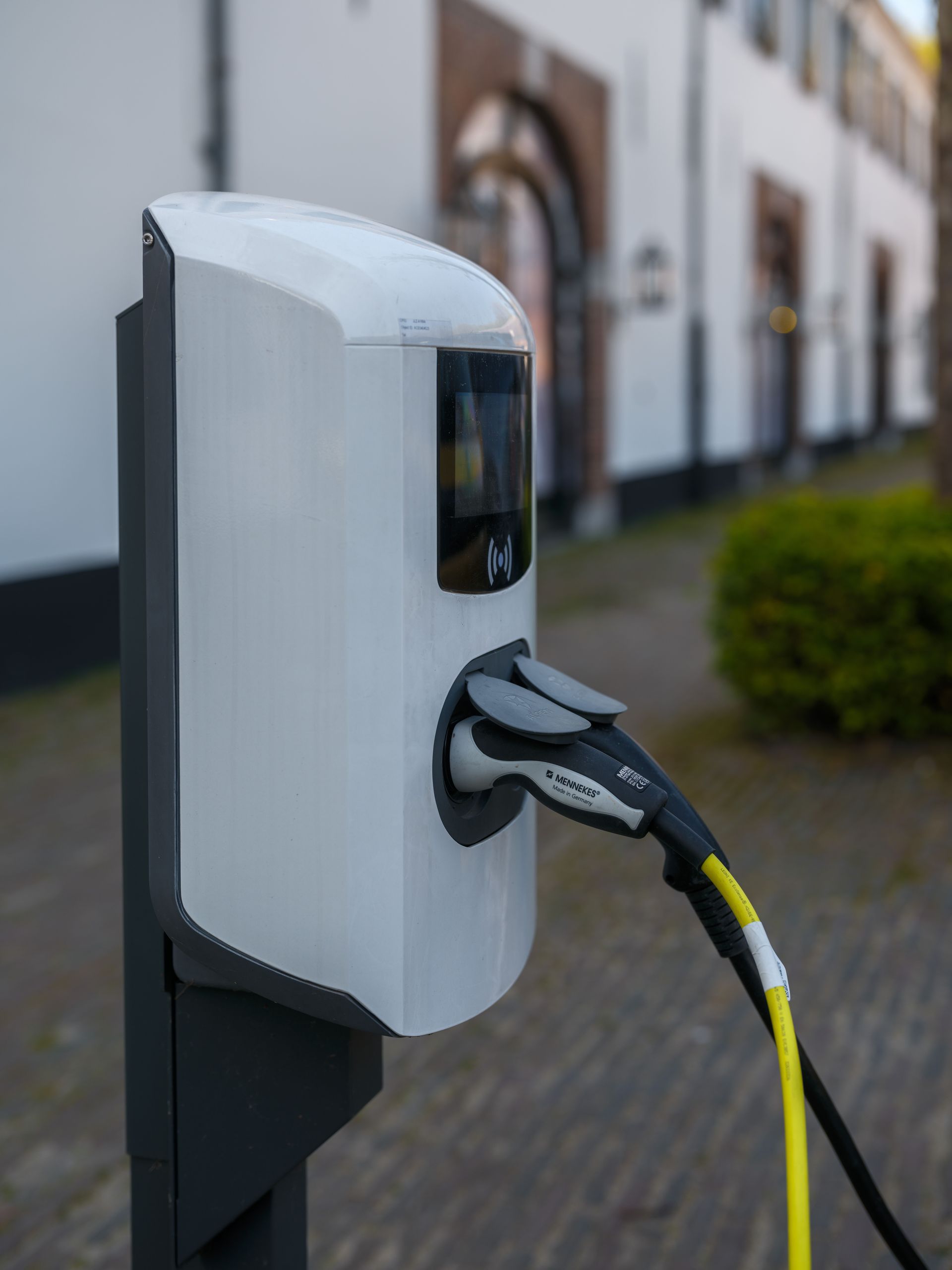
Home Charging Wired to Handle Daily Use
EV Charger Installation in Rock Hill for homes where panel capacity must be confirmed before a 240-volt circuit is added
A dedicated 240-volt circuit sitting unused in your garage is the difference between a car that is full every morning and one you plug into a standard outlet and wait on. Rock Hill Electrician installs Level 2 EV chargers for homes across Rock Hill, beginning with a panel check that confirms whether the existing service can carry the added load before any conduit is run. Owner-operated and veteran-owned, the company gives a clear price before work begins and the owner handles the phone personally.
Many homes in Rock Hill built several decades ago were wired when the average household ran a few lighting circuits, a range, and maybe a dryer. The service entrance and panel were sized for that demand, not for a 240-volt charger drawing 32 to 48 amps on top of existing loads. The electrician measures the panel's available spare capacity and calculates the wire run distance from the panel to the garage or driveway before quoting the job. Where the panel is near its limit, a load calculation is completed and a panel upgrade is quoted alongside the charger circuit so the homeowner sees both options at once.
Arrange a panel review with Rock Hill Electrician to confirm what your current service can support before selecting a charger unit.
How EV Charger Installation Addresses Panel and Circuit Demands
Level 2 charger installation involves more decision points than a standard outlet addition. The charger is mounted on a dedicated breaker sized to match the unit's amperage rating, typically a 40- or 50-amp breaker for a 32-amp charger following the 80 percent continuous load rule. Wire gauge, conduit routing, and breaker size are all interdependent, so the sizing is confirmed at the panel before materials are ordered. The charger is mounted at the wall, wired to the dedicated breaker, and tested for full function before the crew signs off.
Once the installation is complete, the charger communicates with the vehicle at the full Level 2 rate your car's onboard charger accepts, typically adding 25 to 30 miles of range per hour compared to the three to five miles an hour a standard 120-volt outlet delivers. In homes in the Lake Wylie and India Hook areas where newer construction may have a larger panel but an unfinished garage, the wire run routing through finished or insulated walls is planned in advance so the path does not require drywall repair after the fact.
Charger location matters beyond convenience. A charger mounted in a detached garage or at a driveway pedestal requires a longer wire run and may require conduit rated for outdoor or underground use, which changes the material costs. These specifics are addressed during the initial site review so the quote reflects the actual job rather than a generic estimate.
What Property Owners Ask About the Work
Before committing to an EV charger installation, most homeowners want to understand what the electrician is actually evaluating and what happens if the panel cannot handle the load. The answers below cover the process steps and decision points involved.
What does the electrician check at the panel before running a charger circuit?
Available breaker slots, the total amperage of the existing service entrance, and the current load from active circuits are all reviewed to confirm the panel can carry the additional dedicated circuit without exceeding its rated capacity.
Why does wire run distance from the panel to the garage affect the installation?
Longer runs require heavier gauge wire to prevent voltage drop, which increases material cost and affects the route the conduit must follow through the structure.
How is the charger breaker sized relative to the charger's amperage rating?
A charger drawing 32 amps continuously requires a 40-amp breaker under the 80 percent continuous load rule established by electrical code, and the wire feeding it must be sized to match the breaker, not just the charger output.
What happens if the panel does not have enough capacity for a charger circuit?
A load calculation is completed and a panel upgrade is quoted before the charger circuit proceeds, so you have a full picture of what the installation requires rather than a partial fix.
When does an EV charger installation in Rock Hill require a permit?
A dedicated 240-volt circuit installation is a permitted electrical addition in most jurisdictions, meaning an inspection is scheduled after the work is complete and the circuit is tested to confirm it meets code before the permit closes.
Rock Hill Electrician also installs EV chargers in Fort Mill, Tega Cay, Lake Wylie, India Hook, and Van Wyck. Call (803) 621-4016 to speak with the owner and get a clear picture of what your home's panel can support before the charger goes in.