
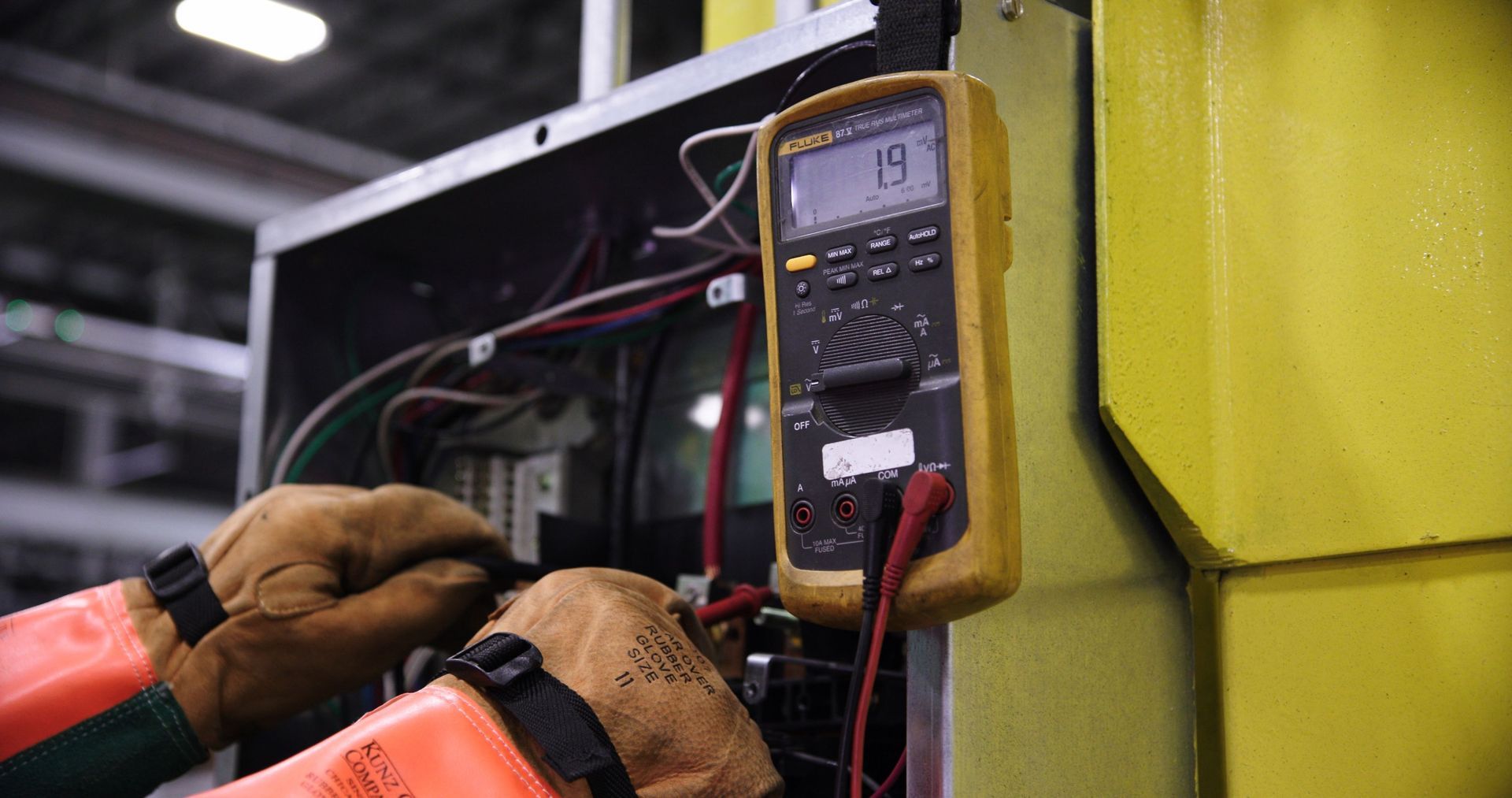
Chasing the Actual Source of Electrical Faults
Electrical Troubleshooting in Rock Hill for breakers that trip repeatedly, flickering lights, and dead or intermittent outlets
Replacing a breaker that keeps tripping without testing the circuit it protects is not diagnosis—it is guesswork with a parts cost attached. Rock Hill Electrician troubleshoots electrical faults in homes and businesses across Rock Hill and York and Chester counties by tracing each symptom to its verified source using meters and circuit testing before any repair is recommended. The owner, a licensed master electrician, handles the diagnostic work personally, which means the explanation you receive at the end reflects actual findings rather than a general assessment relayed through a technician.
Diagnosis begins with the symptom and its history: how long the problem has been occurring, whether it worsens under specific loads, and whether any previous work was done on the affected area. From there, the electrician tests circuits and connections with meters, checks the panel and grounding for irregularities, and isolates the fault before any repair recommendation is made. In older Rock Hill houses, intermittent faults frequently originate at aged connections inside walls or at shared neutrals created during past remodels—conditions that will not appear on a visual inspection of the panel alone.
Request a diagnostic visit from Rock Hill Electrician to have a specific fault traced and explained before deciding on a repair approach.
The Difference Between a Diagnosis and a Parts Swap
Electrical symptoms are rarely caused by the component that is most convenient to replace. A breaker that trips repeatedly is responding correctly to an overcurrent or fault condition on the circuit it protects—swapping the breaker removes the indicator without addressing what is causing it to respond. A proper diagnostic sequence starts at the symptom, works back through the circuit with a clamp meter and continuity tester, and identifies the specific point of failure: a loose connection, a degraded conductor, an overloaded shared neutral, or a legitimate overcurrent condition that requires a dedicated circuit.
After the fault is correctly identified and repaired, the observable change is specific: the breaker that was tripping holds under normal load, the outlet that was intermittent maintains a consistent connection, or the flickering stops because the loose connection generating it has been re-terminated properly. Rock Hill Electrician presents the cause and the repair scope to the customer in plain terms before any work is billed, so the invoice reflects a repair with a documented reason rather than a parts list.
Troubleshooting in homes that have had multiple owners and multiple rounds of electrical work—common in older Tega Cay-area properties that were updated piecemeal—sometimes reveals layered problems where one symptom masks a second underlying fault. In those cases, the electrician documents each finding separately so the customer can make an informed decision about addressing them in sequence rather than all at once.
Common Questions About How Electrical Faults Are Diagnosed
Homeowners and business owners in Rock Hill asking about electrical troubleshooting want to understand what the diagnostic process actually involves and how a legitimate fault diagnosis differs from a quick fix that does not hold. The questions below address the work itself.
What information should you give an electrician before the diagnostic visit starts?
Describe when the problem first appeared, whether it happens under specific loads or at random, and whether any electrical work was done in that area previously. That history narrows the likely fault categories before the first meter is connected and prevents the electrician from working through possibilities the symptom pattern has already ruled out.
How does an electrician trace a fault on a circuit without opening every wall?
The electrician uses a clamp meter to measure current draw at the panel, then works toward the symptom location testing voltage and continuity at outlets, switches, and junction boxes. The fault typically produces a measurable anomaly—a voltage drop, a continuity break, or a resistance reading inconsistent with the rest of the circuit—that identifies the section of wire or connection needing repair.
Why do shared neutrals from older remodels cause intermittent problems that are hard to locate?
A shared neutral carries the return current for two circuits simultaneously. When both circuits are loaded at the same time, the neutral can carry more current than its rating, causing voltage fluctuations on both circuits. The symptom appears intermittently because it depends on what appliances are running concurrently, which makes it look like a random fault rather than a wiring configuration issue.
When is a flickering light a wiring problem versus a fixture problem?
If the flickering is isolated to one fixture and disappears when the bulb is reseated or replaced, the fixture is the likely cause. If the flickering follows a circuit—affecting multiple fixtures or outlets on the same breaker, or worsening when a load is added to the circuit—the fault is in the wiring or connections serving that circuit, not the fixture itself.
What does a correct diagnostic report include before repairs are recommended?
The electrician should identify the specific fault location, explain what is causing the symptom, and describe the repair needed to resolve it. In Rock Hill homes with complex histories of prior electrical work, a complete diagnosis also notes any secondary conditions found during testing that may require separate attention, even if they are not causing an active symptom yet.
Rock Hill Electrician also troubleshoots electrical faults in Fort Mill, Tega Cay, Lake Wylie, India Hook, and Van Wyck. To schedule a diagnostic visit and have a specific fault traced to its source, call (803) 621-4016 and speak with the owner directly about what you are seeing.