
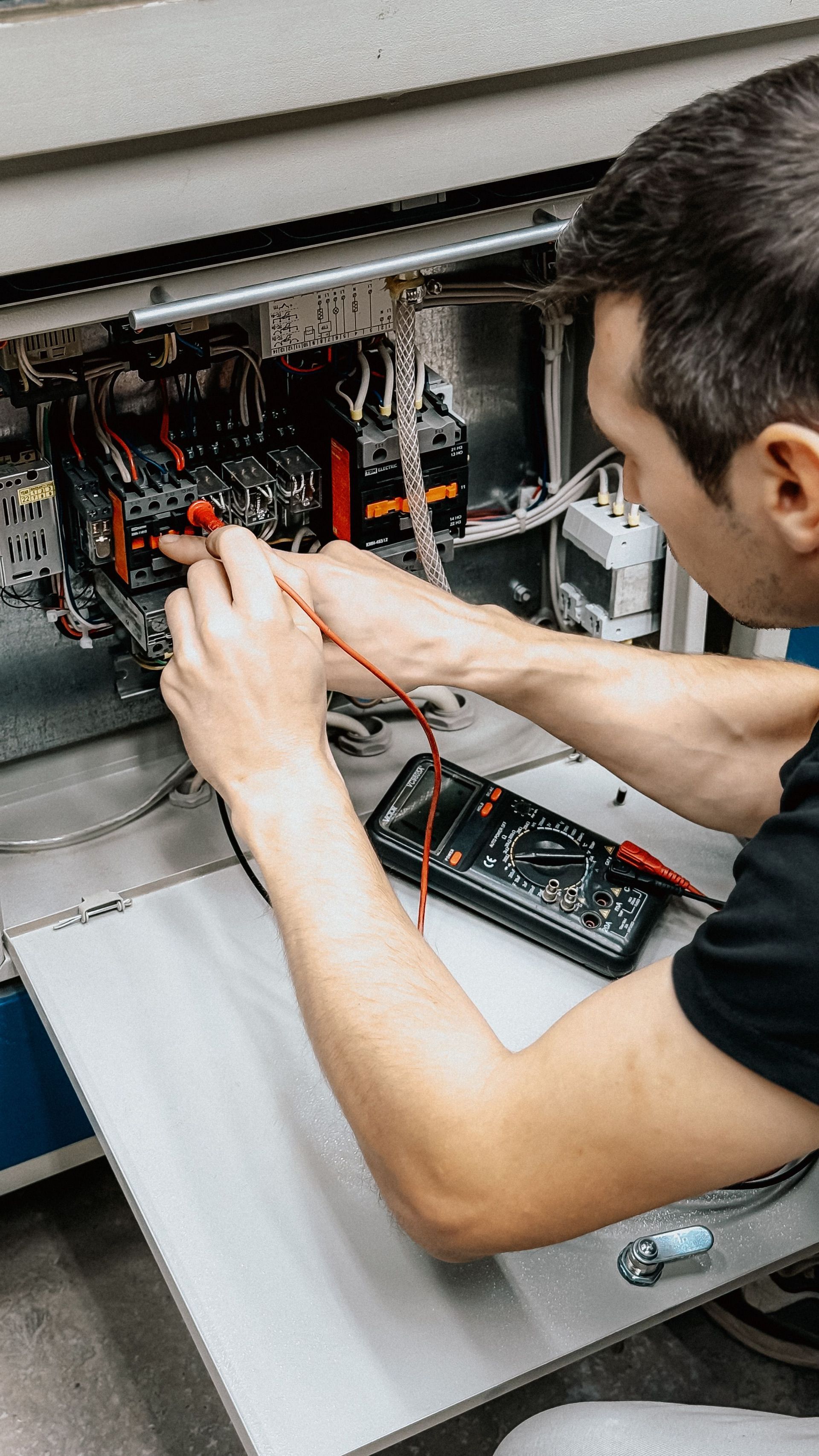
Electrical Faults Diagnosed at the Source
Electrical troubleshooting in Rock Hill for tripping breakers, flickering lights, and dead outlets with no obvious cause
Tripping breakers and flickering lights are symptoms, not causes—and swapping a breaker without testing the circuit first often leaves the real problem in place. Rock Hill Electrician, a veteran-owned, master-licensed contractor, diagnoses the actual source of electrical faults in Rock Hill homes rather than guessing and replacing parts until something sticks. Many homes in this area were built when shared circuits and undersized service were standard, meaning a breaker that trips repeatedly is frequently a load or wiring problem, not a faulty breaker.
A technician starts by asking when the problem happens and what appliances or devices were running at the time. From there, the circuit is tested end to end: connections at the panel and outlets are checked, voltage is measured under load, and the actual amperage draw is compared against the breaker rating. The customer receives a written explanation of the cause and a repair quote before any work begins—no repairs happen until the diagnosis is understood and approved.
To have a specific electrical fault diagnosed with a written explanation of the cause, call Rock Hill Electrician at (803) 621-4016.
Why Electrical Problems Happen and How to Stop Them
The diagnostic process isolates the fault at its origin rather than at the device showing the symptom. Voltage drop measured at an outlet, for example, can originate at a loose connection inside the wall, at a shared neutral that is failing, or at a corroded terminal in the panel—three different locations requiring three different repairs. Testing with a load meter and checking connections at every accessible point in the circuit path is what separates a complete diagnosis from an educated guess.
Once the fault is identified and repaired, the circuit holds under normal load without tripping, outlets in the affected area measure at correct voltage, and lights on that circuit stop flickering. Rock Hill Electrician tests each repaired circuit before leaving and confirms the fix held under the conditions that originally triggered the fault.
Some faults are straightforward—a single loose connection or an overloaded circuit that needs a dedicated line. Others involve wiring that has degraded at multiple points or a panel with heat damage that has affected several breakers. The written diagnosis clarifies which situation applies and lays out the repair options, including which items are safety-critical and which can be monitored over time.
Common Questions About Electrical Troubleshooting
The following questions address how electrical troubleshooting is performed, what the process involves, and what homeowners can expect before and after a diagnostic visit in Rock Hill.
What information should you have ready before the technician arrives?
Note when the problem started, whether it happens under specific loads or at random, and which rooms or outlets are affected—this narrows the diagnostic starting point and reduces the time spent ruling out unrelated circuits.
How does a technician tell the difference between a bad breaker and an overloaded circuit?
A clamp meter placed on the circuit conductors measures actual current draw; if the draw exceeds the breaker rating during normal use, the circuit is overloaded, not the breaker defective—replacing the breaker in that situation changes nothing.
Why do outlets in different rooms sometimes stop working at the same time?
In many Rock Hill homes built before 1990, multiple outlets in separate rooms share a single circuit, and a fault or overload at any point on that circuit affects every outlet downstream—tracing the full circuit path is necessary to identify where the break occurred.
What does a shared neutral fault look like and why does it cause flickering?
A failing shared neutral creates an unbalanced load between two circuits, which causes voltage to shift—lights on one circuit dim while those on the other brighten, a symptom that points specifically to the neutral connection rather than any individual device.
How do you verify the repair held after the technician leaves?
Plug a known working device into each outlet that was affected, run the loads that originally triggered the problem, and confirm the breaker stays set—if it holds under those conditions, the fault has been resolved at the source.
Rock Hill Electrician also performs electrical troubleshooting in Fort Mill, Tega Cay, Lake Wylie, India Hook, and Van Wyck. If a persistent electrical fault has gone unresolved, call (803) 621-4016 to schedule a diagnostic visit with a written explanation of findings.